
Introduction
Heart blockage is a serious condition that affects blood flow to the heart muscle. When your heart does not get enough oxygen-rich blood, it can lead to chest pain, heart attack, or other serious complications. Many people ignore early warning signs because they seem mild or temporary. Learning how to monitor your heart health at home can help you spot issues early and seek timely treatment.
Checking for heart blockage at home does not replace professional diagnosis, but it can help you stay informed about your health. By tracking symptoms, monitoring vital signs, and making simple lifestyle adjustments, you can reduce risks and detect problems early. This guide will walk you through the symptoms to watch for, the tools you can use, and when to see a doctor. how to check heart blockage at home
Understanding Heart Blockage
Heart blockage happens when fatty deposits, called plaque, build up in the arteries that supply blood to the heart. This condition is known as coronary artery disease. The plaque can narrow the arteries, reduce blood flow, and in severe cases, completely block them. This can trigger chest pain, shortness of breath, and even heart attacks if not addressed. how to check heart blockage at home
There are different types of blockages. A partial blockage reduces blood flow but may not cause immediate severe symptoms. A complete blockage stops blood flow entirely, which is a medical emergency. Common causes include high cholesterol, high blood pressure, smoking, obesity, and sedentary lifestyles. Genetics can also play a major role, meaning if heart disease runs in your family, your risk may be higher. how to check heart blockage at home
Understanding risk factors helps you take preventive measures. People over 40, those with diabetes, or those who live stressful lifestyles should be extra careful. Knowing what leads to blockages is the first step toward preventing them and staying heart healthy. how to check heart blockage at home
Early Warning Signs of Heart Blockage
Heart blockage often develops silently over time, but there are early signs that should not be ignored. The most common symptom is chest pain or pressure, often described as a squeezing or heavy feeling. This pain can spread to the arm, neck, jaw, or back. Even mild chest discomfort should be taken seriously, especially if it happens during physical activity. how to check heart blockage at home
Shortness of breath is another key sign. If you find yourself getting winded after light activity or while resting, it may indicate restricted blood flow. Fatigue is also common. When the heart struggles to pump blood, your body receives less oxygen, leaving you feeling tired even after enough sleep. how to check heart blockage at home
Other symptoms include dizziness, nausea, and sweating without physical exertion. Some people experience what is called a silent heart attack, where symptoms are mild and often mistaken for indigestion. Recognizing these early signs allows you to act quickly and avoid severe complications. how to check heart blockage at home
How to Check Heart Blockage at Home
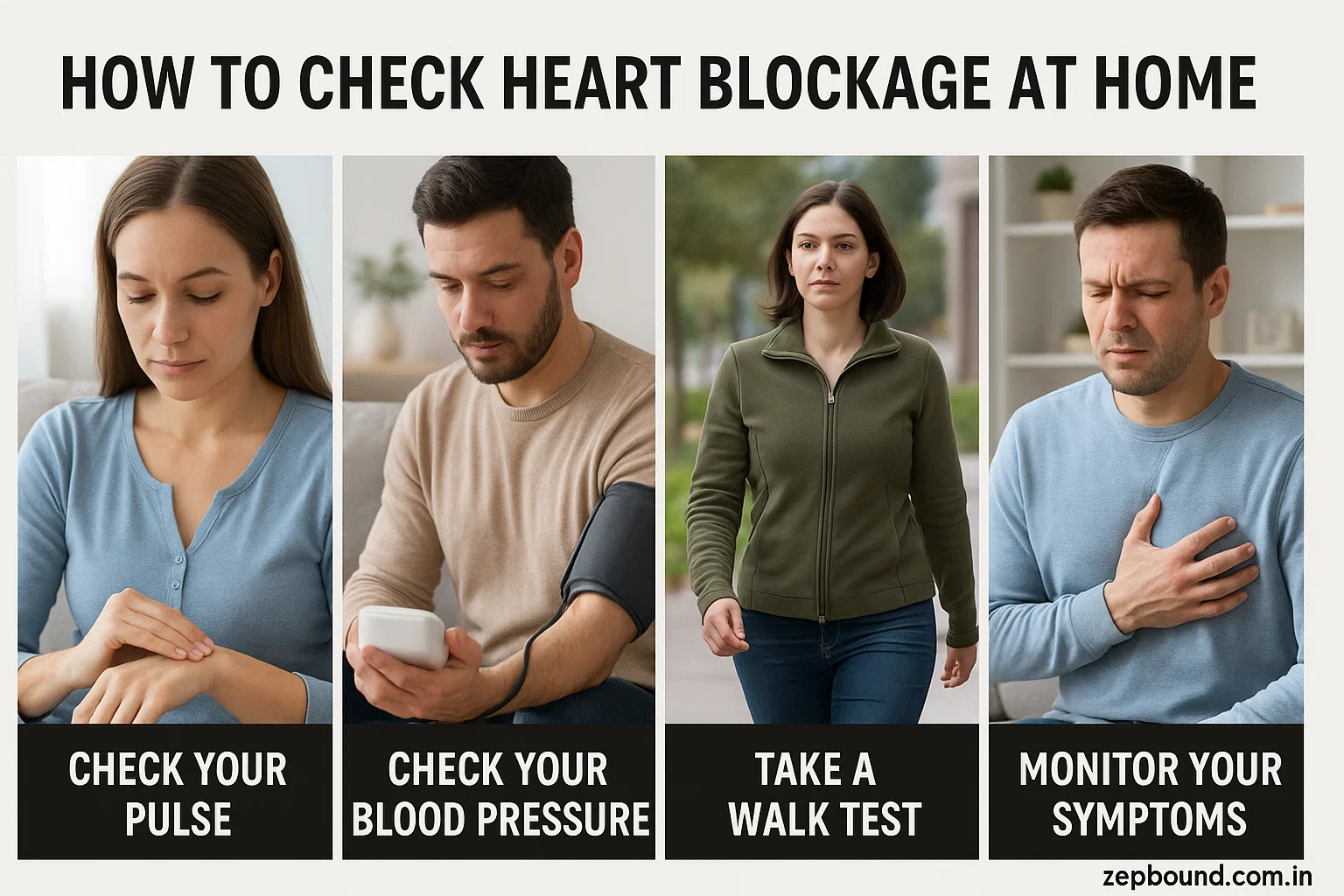
You can monitor your heart health at home with a few simple methods. Start by regularly checking your pulse. Place two fingers on your wrist or neck and count your heartbeat for 60 seconds. An irregular heartbeat or unusually high or low pulse rate may be a warning sign. how to check heart blockage at home
Measure your blood pressure with a home monitor. Consistently high readings put stress on your arteries, increasing the risk of blockages. Aim for readings around 120/80 mmHg. If your numbers are much higher or frequently fluctuate, consult a doctor.
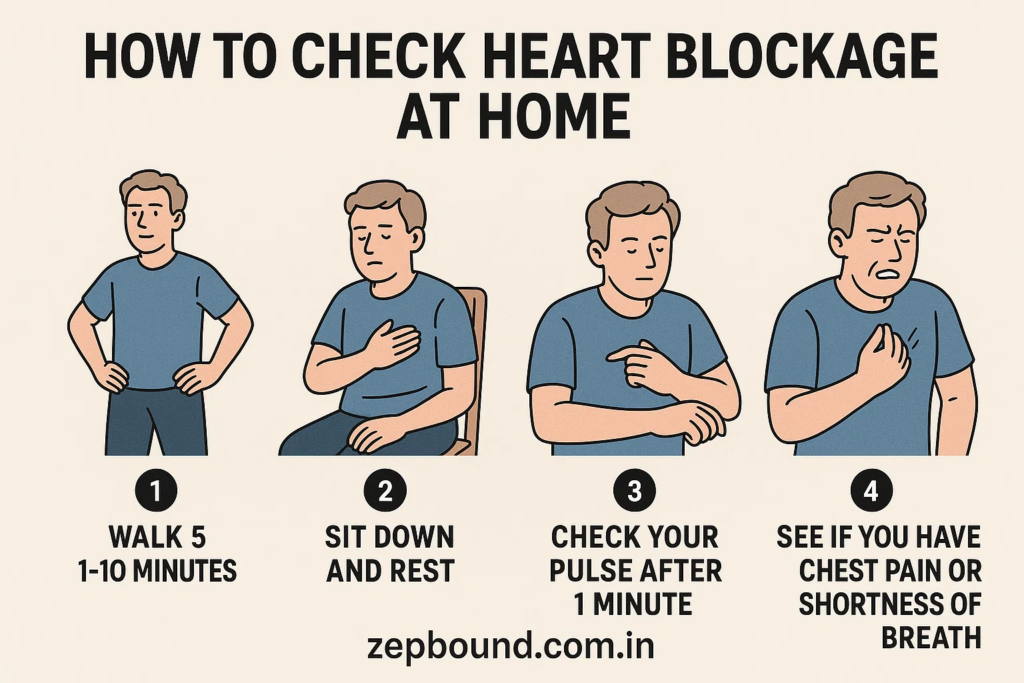
There are portable devices and smartphone apps that can track heart rhythm and detect irregularities. Some fitness trackers also record heart rate trends and alert you when something seems abnormal. Try a simple walking test. Walk at a steady pace for a few minutes. If you experience chest discomfort or breathlessness, it may be a sign of reduced blood flow.
Lifestyle tracking is also important. Keep a journal of your daily habits, including diet, exercise, and stress levels. This helps you identify patterns that may be affecting your heart health and make changes where needed. how to check heart blockage at home
When to Seek Medical Help
Self-checks are helpful but cannot replace professional evaluation. If you experience chest pain that lasts more than a few minutes, pain that spreads to your arm or jaw, or shortness of breath that feels severe, seek immediate medical attention. These symptoms could indicate a heart attack and require urgent care.
Even if symptoms are mild, schedule a checkup if they persist. Your doctor may recommend tests such as an electrocardiogram (ECG), echocardiogram, or angiography to get a clear picture of your heart health. Delaying medical help can worsen the condition and increase the risk of complications.
Remember that home monitoring is about awareness, not diagnosis. If anything feels unusual or concerning, it is safer to get checked early. Timely intervention can save your life. how to check heart blockage at home
Prevention and Healthy Lifestyle Tips
Preventing heart blockage starts with making healthy choices. Eat a balanced diet rich in fruits, vegetables, whole grains, and lean proteins. Avoid processed foods, excessive sugar, and saturated fats that can raise cholesterol levels. how to check heart blockage at home
Exercise at least 30 minutes a day, five times a week. Activities like brisk walking, cycling, or swimming help improve blood circulation and keep your heart strong. If you are new to exercise, start slow and increase gradually. how to check heart blockage at home
Manage stress through techniques like deep breathing, meditation, or yoga. Chronic stress can raise blood pressure and harm your heart over time. Quit smoking and limit alcohol consumption, as both contribute to artery damage. Finally, get regular health checkups to monitor cholesterol, blood sugar, and blood pressure levels.
Conclusion
Heart blockage is a serious condition, but early detection and lifestyle changes can make a big difference. Monitoring your symptoms at home, tracking your vital signs, and staying consistent with healthy habits can help prevent complications. If you notice warning signs, do not wait to seek professional care. Taking action early can protect your heart and improve your quality of life.


I’d incessantly want to be update on new content on this website , saved to favorites! .