
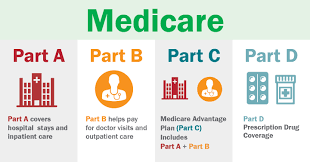
Understanding what does Medicare Part B cover gives you control over medical decisions and costs. You can avoid surprises and choose supplemental plans wisely.
Medicare Part B is one of the core components of Original Medicare. It covers outpatient and medical services. However, it has gaps. This guide shows what is included, what isn’t, how much you’ll pay, when to enroll, and how to make Part B work for you.
What Medicare Part B Covers
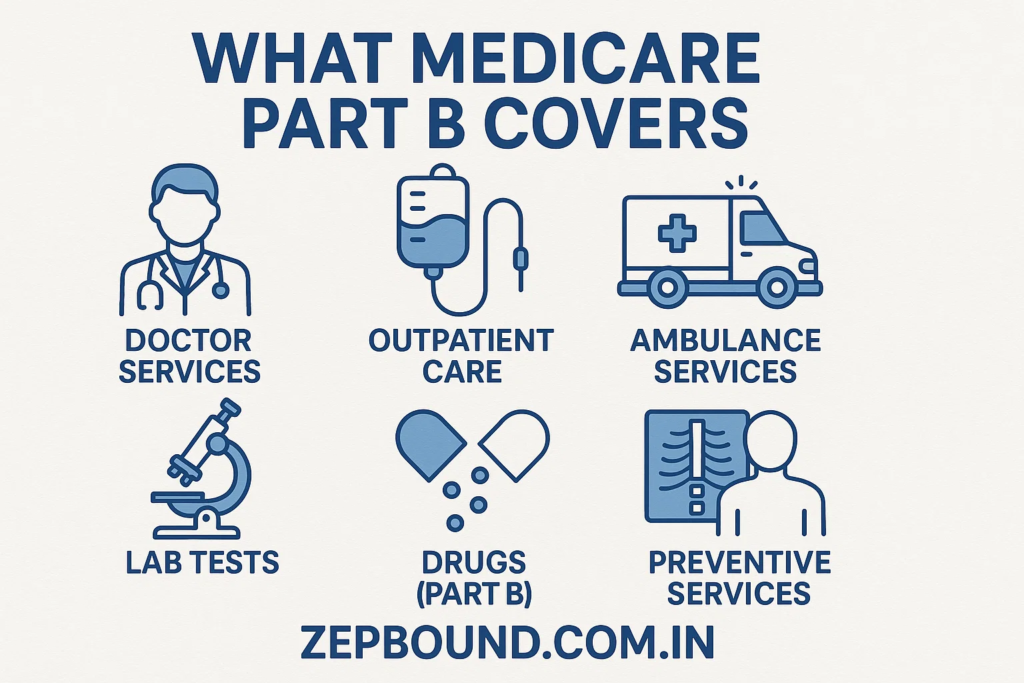
Medicare Part B (Medical Insurance) pays for many services that Part A does not cover. These must be medically necessary and approved by Medicare.
Here is a breakdown of Part B benefits:
- Doctor and specialist services
Office visits, consultations, second opinions, and follow-up care. - Outpatient hospital services
Surgeries, diagnostics, observation stays, and outpatient treatments. - Preventive services
Screenings (e.g. cancer, cholesterol), flu shots, wellness visits, and certain vaccinations. - Durable Medical Equipment (DME)
Equipment you use at home: wheelchairs, walkers, oxygen supplies, braces. - Home health services (limited)
If you meet eligibility, Part B can pay for part-time skilled nursing or therapy at home. - Mental health and behavioral health
Outpatient therapy, counseling, partial hospitalization programs. - Laboratory tests, X-rays, diagnostics
Blood tests, imaging, pathology, etc. - Ambulance transportation
When medically necessary and no other means is safe. - Clinical research
If Medicare authorizes the trial, certain costs may be covered. - Certain medications administered in outpatient settings
Medications like infusions, chemotherapy, or immunosuppressants given in a clinic may be covered under Part B. - Prosthetic devices and orthotics
Artificial limbs, braces, and sometimes supplies to maintain them. - One pair of eyeglasses or contact lenses after cataract surgery
In cases where the surgery requires them.
What It Does Not Cover
Knowing gaps is as important as knowing coverage. Here are common things Part B does not cover:
- Routine dental care, dentures, and most oral surgery
- Routine vision care, eyeglasses (except after cataract surgery)
- Hearing aids and hearing exams
- Long-term care, custodial care (help with daily living)
- Most prescription drugs (these fall under Part D)
- Cosmetic surgeries
- Care received outside the U.S. except in rare emergency cases
- Services already covered by Part A (inpatient hospital care)
Because of these gaps, many people use Medicare Advantage (Part C) or Medigap (Supplemental) and Part D to fill coverage holes.
Costs and Premiums
Costs are a major factor in deciding if Medicare Part B is worth it for you. Below are the key cost components for 2025.
Premiums & Deductible
- The standard monthly premium for Part B is $185.00 in 2025.
- The annual deductible is $257 before Medicare starts paying.
Coinsurance & Cost Sharing
- After meeting the deductible, you typically pay 20% of the Medicare-approved amount for most services.
- For preventive services, often no cost is charged if Medicare covers them in full.
Income-Related Monthly Adjustment Amount (IRMAA)
If your income is above certain thresholds, you pay an extra surcharge on top of the base premium.
Here’s how it works in 2025:
| Income Bracket (file single / joint) | IRMAA Charge | Total Part B Premium |
|---|---|---|
| ≤ $106,000 / ≤ $212,000 | $0 | $185.00 |
| > $106,000 to $133,000 / > $212,000 to $266,000 | $74.00 | $259.00 |
| Higher brackets up to ≥ $500,000 / $750,000 | up to $443.90 | up to $628.90 |
The IRMAA is based on your Modified Adjusted Gross Income (MAGI) from two years earlier (for 2025, your 2023 tax return).
Out-of-Pocket Limits & Protection
Original Medicare (Part A + B) has no cap on your total out-of-pocket spending. If you use many services, costs may rise significantly.
Medicare Advantage plans (Part C) often set a maximum out-of-pocket limit for Part A + B services. In 2025:
- In-network limit: $9,350
- Combined in-network / out-of-network: $14,000
Other Cost Notes
- If you delay Part B enrollment, you may owe a late enrollment penalty (10% per 12 months delayed).
- Medigap or supplemental plans can cover your deductible, coinsurance, or excess charges. But some plans (like C and F) are no longer sold to new beneficiaries.
- If your income changes or you have a qualifying event (divorce, job loss, etc.), you may petition to reduce or remove IRMAA.
Enrollment Periods and Deadlines
To get Medicare Part B and avoid penalties, you must enroll during certain windows.
Initial Enrollment Period (IEP)
You qualify for IEP around your 65th birthday:
- Starts 3 months before your birth month
- Includes your birth month
- Extends 3 months after your birth month
Total = a 7-month window.
General Enrollment Period (GEP)
If you miss IEP, you can sign up in the General Enrollment Period:
- January 1 to March 31 each year
- Coverage starts July 1
- Late enrollment penalty may apply
Special Enrollment Period (SEP)
You may delay enrollment without penalty if you or your spouse:
- Has employer group health insurance (through active work)
- You qualify for certain special circumstances
Usually you get 8 months after employment or coverage ends to enroll without penalty.
Late Enrollment Penalty
- For every 12-month period you could have had Part B but didn’t enroll, your premium may increase by 10%.
- This penalty lasts for life.
Always check your state rules. Some states offer guaranteed issue rights for Medigap when you first enroll.
How to Get the Most from Part B
To use Part B efficiently, follow practical steps.
Use preventive services fully
Many screenings, shots, and wellness visits are free under Part B if Medicare covers them. Don’t skip them.
Choose providers who accept assignment
When doctors accept “assignment,” they agree to Medicare’s approved fee. You pay less. Ask before receiving care.
Add supplemental coverage
- Medigap can help cover your deductibles or coinsurance.
- Medicare Advantage (Part C) may include additional benefits (dental, vision) and cap out-of-pocket.
Monitor your income
If your income is near IRMAA thresholds, a small change could push you into the surcharge zone. Plan withdrawals, investments, or income timing carefully.
If life changes (retirement, loss of spouse, reduced income), file for a new initial determination to reduce IRMAA.
Review your plan annually
Medicare rules, premiums, and services change. Use the open enrollment period (Oct 15 – Dec 7) to switch between Original Medicare and Advantage, or change Part D plans.
Avoid unnecessary services
Check with your doctor: is a test or procedure really needed? Ask for alternatives or generic treatments.
Appeal when needed
If Medicare denies payment, submit an appeal. Many appeals succeed with supporting evidence.
2025 Updates & Trends
Since Medicare rules evolve, here are 2025 highlights you must know:
- Part B premium rose from $174.70 (2024) to $185.00 in 2025.
- Deductible increased from $240 to $257.
- IRMAA surcharges now push some high-income beneficiaries to pay up to $628.90 monthly.
- The Inflation Reduction Act adds a $2,000 cap on out-of-pocket costs for Part D prescription drugs (not directly Part B, but relevant to your total Medicare costs).
- Certain Medigap plans (C and F) can no longer be sold to new enrollees
Sample Cost Scenarios
Here are simple examples to illustrate how costs may play out.
Scenario 1: Standard income, moderate use
- You have income under IRMAA thresholds → pay $185 premium
- You use doctor visits, labs, and outpatient therapy
- You will likely meet the $257 deductible
- Thereafter you pay 20% of covered services
- If you add Medigap Plan G, it may cover coinsurance but not deductible
Scenario 2: High income, heavier use
- Your income triggers IRMAA → you pay up to $628.90
- You use multiple outpatient services, DME, and infusions
- Without a supplemental plan, your out-of-pocket cost can climb significantly
- An Advantage plan might help by capping your total exposure
These scenarios show: premiums are just one part of your cost.
Summary & Key Takeaways
- Knowing what does Medicare Part B cover helps you plan health care and avoid surprises.
- Part B covers outpatient care, diagnostics, equipment, mental health, preventive services, and more.
- It does not cover routine dental, vision, hearing aids, or long-term care.
- For 2025, premium = $185, deductible = $257. You pay ~20% after you meet the deductible.
- High incomes may trigger IRMAA surcharges, pushing premiums up substantially.
- You must enroll during IEP or GEP, or qualify for SEP; late enrollment incurs permanent penalty.
- Use preventive benefits, accept assignment, and consider supplemental coverage.
- Review your plan annually. Medicare rules change.
- Watch your income carefully. Small changes may cost you more in IRMAA.
Call to Action
Now that you understand what Medicare Part B covers, take these steps:
- Review your health needs and cost tolerance
- Compare Part B + supplemental (Medigap or Advantage) options
- Check if your health providers accept assignment
- Monitor your income to avoid IRMAA surprises
- Talk to a Medicare advisor for personalized guidance


I don’t think the title of your article matches the content lol. Just kidding, mainly because I had some doubts after reading the article.
Your point of view caught my eye and was very interesting. Thanks. I have a question for you.
Your point of view caught my eye and was very interesting. Thanks. I have a question for you.
Can you be more specific about the content of your article? After reading it, I still have some doubts. Hope you can help me.